
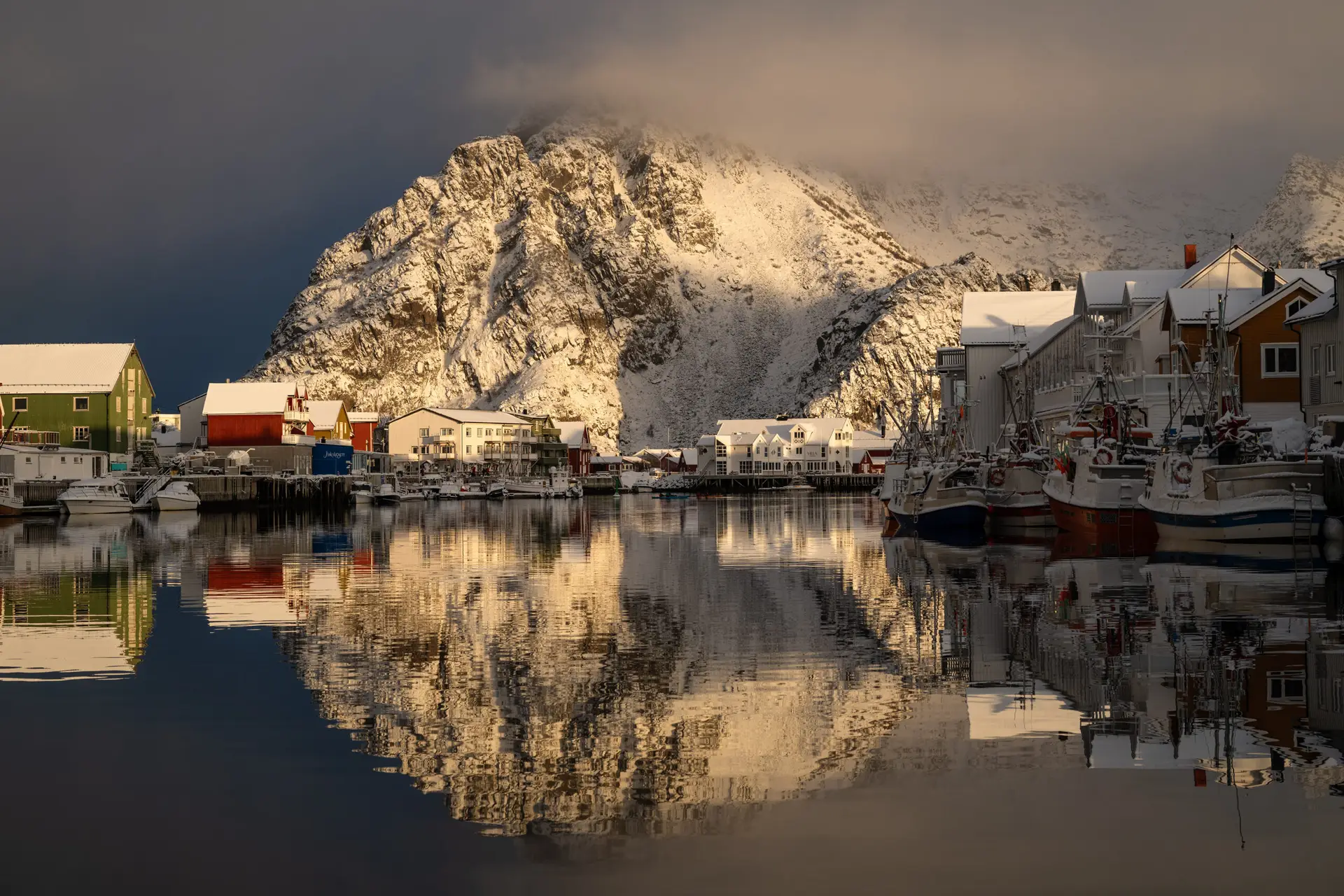
Lofoten at its most alive. A working fishing village spread across small islands, connected by bridges and surrounded by steep mountains and open water.
Varies
Good
Warm tones
Easy
All year
Village · Islands · Coast
Wind · Bridges · Busy in high season · Drone restrictions apply
Henningsvær is Lofoten at its most alive. Spread across a handful of small islands at the edge of Vestfjord, the village is connected by bridges and surrounded by steep mountains, open water and a working harbour. Around 500 people live here year-round, but fishing boats, galleries, cafés, restaurants and independent shops give the village a character that goes far beyond its size.
Fishing is still part of everyday life, particularly during the winter cod fishery when boats return with skrei and the harbour becomes noticeably busier. Look closely and you will find traces of that history everywhere: old fishermen's cabins, wooden warehouses, drying racks, fishing equipment and weathered buildings along the waterfront. Henningsvær is one of Norway's 13 protected cultural environments, recognised for the way its buildings and businesses preserve the story of coastal life from the early 1800s to today.
But Henningsvær is not frozen in the past. The old fishing village has developed into one of Lofoten's most creative corners, with contemporary galleries, artists, craftspeople and independent businesses occupying many of its historic buildings. KaviarFactory brings contemporary art into the village, while Trevarefabrikken has transformed a former carpentry factory into a lively meeting place with accommodation, food, events and a distinctive industrial atmosphere. The result is a fascinating mix of working harbour, old wooden architecture and modern creative culture.
For photographers, this contrast is what makes Henningsvær so rewarding. Do not just look for the postcard view. Walk slowly around the harbour and bridges and look for fishing boats reflected in the water, colourful doors, weathered timber, ropes, nets and small details that reveal the village's character. Then turn around and you will often find a dramatic mountain rising behind an otherwise ordinary street.
Come for the views, but stay for the village. Henningsvær is best experienced slowly, on foot, with your camera ready for the moments between the famous viewpoints.
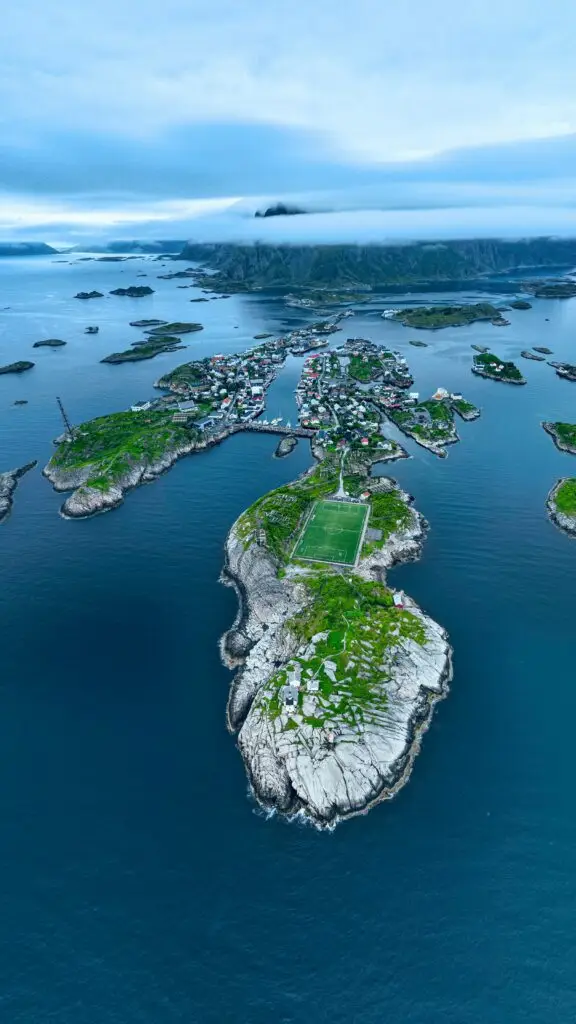 Photo: Joshua Earle
Bridges and elevated viewpoints for overviews; harbour level for detail and texture work.
The best way to experience Henningsvær is on foot. The roads and streets are narrow, and Visit Lofoten specifically recommends leaving the car in one of the larger parking areas and exploring the village by foot.
Walk slowly through the harbour area, across the bridges and along the smaller streets. Look for fishing boats, colourful wooden buildings, stockfish, old warehouses, reflections in the water and views back towards the surrounding mountains. The village is especially photogenic when you move beyond the obvious viewpoints and photograph the details that show that Henningsvær is still a living fishing community.
You are welcome to photograph it, but we kindly ask you not to touch it because it is food.
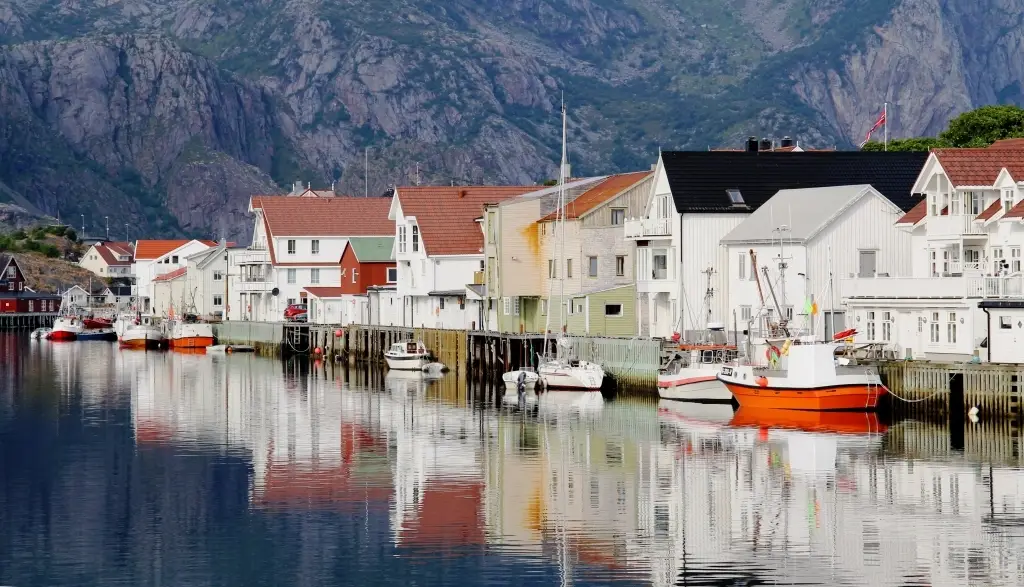
Classic "Arctic Venice" view with colourful buildings and water.
Open in Google Maps → Photo: Cato Runo Melby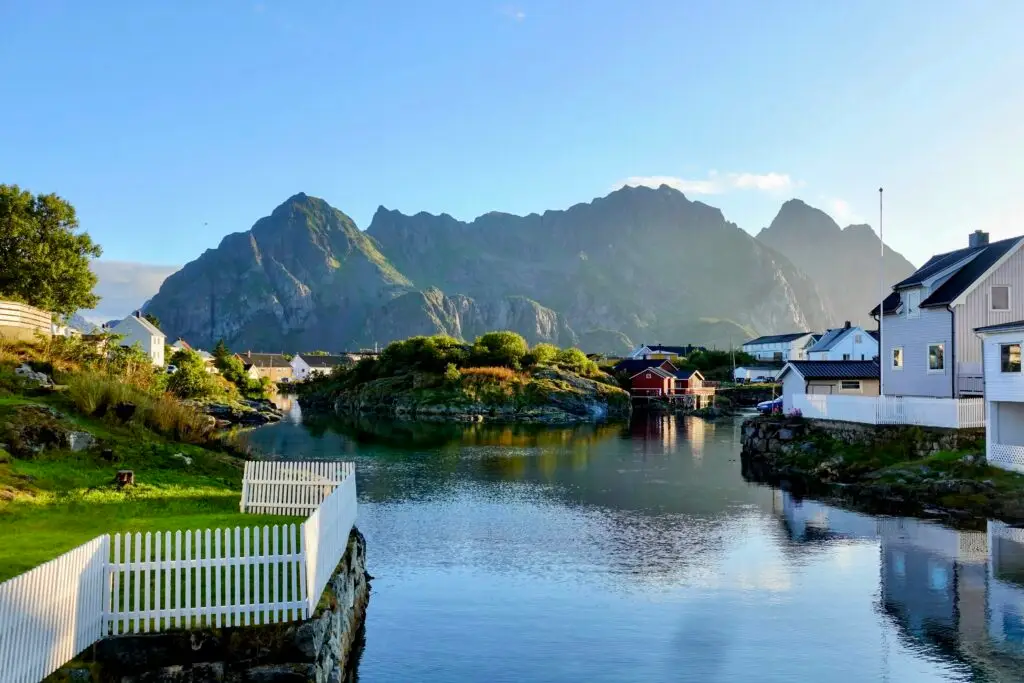
Another attractive composition of Henningsvær and its waterfront buildings.
Open in Google Maps → Photo: Olav Magne Trydal
Festvågtinden rises 541 metres above Henningsvær, and the hike leads to a spectacular view over the village, surrounding islands and Vestfjord. The route is relatively short but steep, with rough sections and some scrambling, so it requires good footwear and suitable conditions. From the summit, Henningsvær looks almost miniature among the surrounding sea and mountains, and the viewpoint is particularly memorable during the midnight sun.
Read the Festvågtinden hike guide →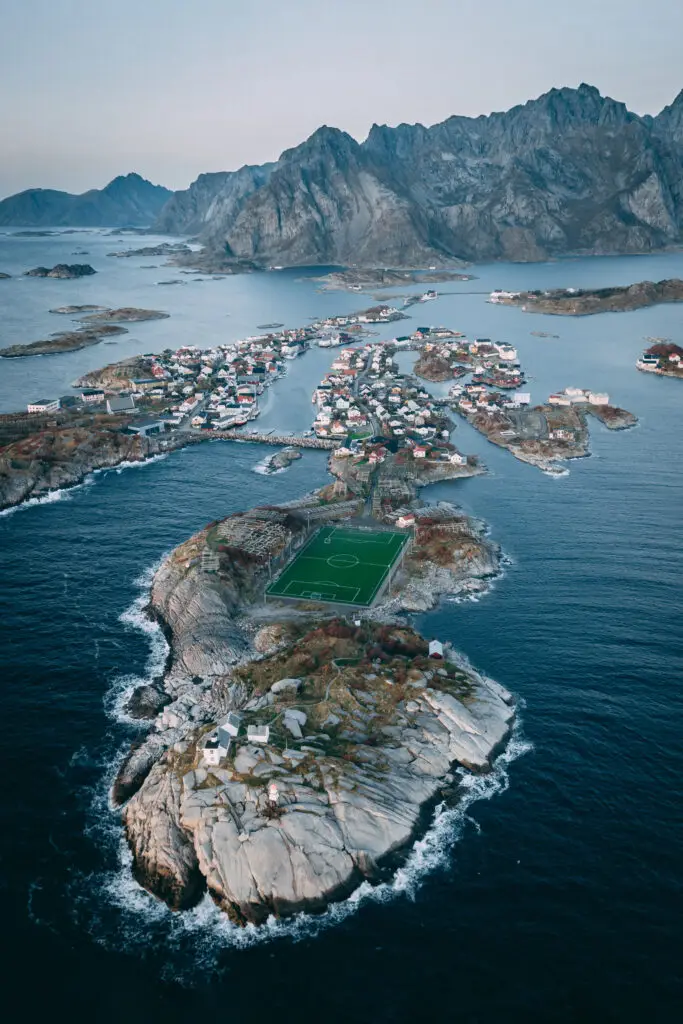
One of the village's most recognisable landmarks is the football field built on a small rocky island surrounded by water. It has become one of Lofoten's most photographed scenes, but it is still a local sports field, not a dedicated attraction. Photograph it respectfully and remember that Henningsvær is a living community. The classic composition is from above, showing the pitch surrounded by rocky coastline and water. For ground-level photography, look for elevated viewpoints around the surrounding islands rather than trying to reproduce only the aerial image.
Do not enter restricted or private areas to get a photograph, and be particularly careful with drone use around homes and people. Check the current rules and avoid disturbing people, boats or activities around the village.
Just beyond the football field, Visit Lofoten highlights an elevated spot that can be particularly good for photographing the northern lights. The position gives you enough elevation and distance from Henningsvær's lights to frame Festvågtind, the village and the northern lights together.
Bring a tripod and a wide-angle lens around 14–24mm. Include some of Henningsvær's lights in the foreground and Festvågtind behind the village. This is one of the places where the village itself becomes part of the northern lights composition rather than simply being a foreground subject.
Henningsvær Church was built in 1852 and is an important cultural and historical landmark in the village. The wooden church is a good example of traditional Norwegian architecture and remains an important place for the local community.
Look beyond the classic front-facing photograph. The surrounding landscape and simple wooden architecture work particularly well in soft morning or evening light.
Works well in golden hour light. The island layout is best revealed from elevation.
Look for patterns, geometry and elevated compositions. Gain elevation whenever possible; it reveals the unique island layout. The Festvågtinden hike nearby gives the best elevated view over Henningsvær and its island layout, so plan both on the same day.
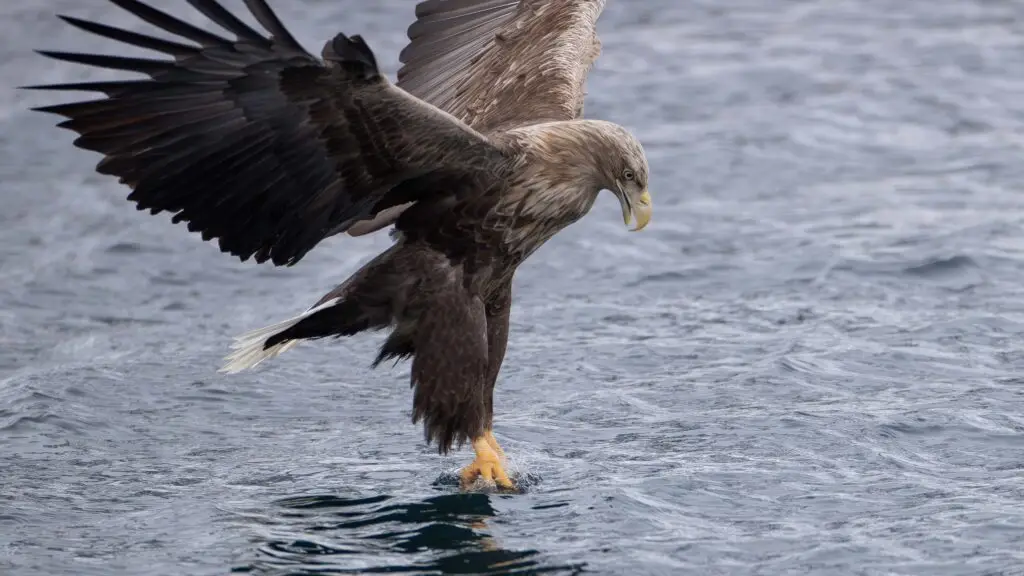 Photo: [photographer]
The village is small enough to explore on foot, but there is much more here than the football field. Walk through the harbour, look at the old buildings, visit a gallery, stop for food, explore the local shops and, if you have time, get out onto the water or hike Festvågtinden. For photography, stay until the light changes. Henningsvær becomes particularly interesting when the streets quieten down and the surrounding mountains begin to catch the last light. Our biggest tip is simple: remember that this is someone's home. Photograph it, enjoy it and explore it, but do so with respect for the people who live here year-round.
Henningsvær has narrow roads and can become very busy in summer. We advise you to park in one of the larger public parking areas and walk into the village rather than trying to drive through the narrow streets.
You can reach Henningsvær by bus. It is a very convenient way to get in without the hassle of finding a parking spot or driving through the narrow streets. The Reis app can be used to plan public transport journeys and check departure times throughout the region. The Arctic Route operated by Best Arctic also connects Henningsvær during the summer season and provides a hop-on/hop-off option between Narvik and Å. Visit Lofoten notes that the route passes Henningsvær twice daily during summer.
Public toilets are available in the village. Please do not use nature as a toilet.
Henningsvær is not an open-air museum. People live and work here year-round, so please be mindful of your surroundings and do not step onto private property.
Henningsvær has developed into one of Lofoten's major cultural hubs, with a surprisingly strong food scene and an active calendar for a village of its size.
The village is home to galleries featuring both local artists and internationally recognised names, alongside smaller businesses producing pottery, glass, jewellery and other handmade pieces. The village is intentionally mall-free, with small independent shops instead of large commercial chains. Visit Lofoten recommends simply wandering through the streets and allowing the local shops and galleries to become part of the experience.
KaviarFactory is an international contemporary art venue housed inside a former caviar factory. The building was purchased and rehabilitated by collectors Venke and Rolf Hoff in 2013 and now hosts exhibitions by Norwegian and international artists. Artists associated with exhibitions here include Ai Weiwei, Bjarne Melgaard, Marina Abramović and Yoko Ono. There is also a gift shop with art books and wool garments, and parking for visitors.
The former industrial building itself is worth photographing, especially if you enjoy architecture and textures.
Henningsvær has a strong international climbing community and is surrounded by mountains and climbing walls. The mountains around the village, particularly the famous Presten, attract climbers from around the world, giving the village a distinctly outdoorsy atmosphere. Klatrekaféen is one of the local gathering spots for the climbing community and is also a good place to stop for coffee or something casual to eat. For visitors who want to climb rather than simply watch, we recommend local guides including I Fri Natur and Nordnorsk Klatreskole, particularly if you want a guided experience or are unfamiliar with the local terrain.
Henningsvær also has a strong ski touring community during winter. We recommend guided ski touring for visitors who are not completely familiar with the terrain, because conditions can change quickly and avalanche danger, route choice and snow conditions all need to be assessed.
Trevarefabrikken offers Trevaretur, an all-inclusive winter experience combining ski touring or climbing with accommodation, food, culture and sauna. The experience uses local IFMGA-certified mountain guides. Lofoten's main ski touring season is generally February to April, although conditions can extend beyond this period. The coastal climate means visitors should be prepared for rapid weather changes, including rain, wind, blowing snow and poor visibility.
One of the best ways to experience Henningsvær is from the water. The village sits among small islands and skerries, so getting out onto the ocean gives a completely different perspective of the landscape. Our recommendation is exploring the area by RIB, kayak, snorkelling or diving. Local operators offer RIB trips around the islands and surrounding waters, including sea eagle safaris. This is a good option if you want to combine wildlife, mountains and the fishing-village landscape in one experience.
Henningsvær has a surprisingly strong food scene for a village of its size. You will find a concentration of cafés and restaurants within easy walking distance, and we recommend trying local seafood, particularly skrei, the Northeast Arctic cod associated with the winter fishery. Fiskekrogen, Vind Brasserie and Trevarefabrikken are among the places to look for food, while the village's cafés make it easy to stop for coffee between exploring the harbour and galleries. Opening hours can change with the seasons, particularly outside summer, so check ahead if you have a specific restaurant in mind.
If you have the time, stay overnight. Henningsvær has everything from traditional rorbuer to hotels and converted historic buildings, with places such as Henningsvær Bryggehotell and Trevarefabrikken putting you right in the middle of village life. The biggest advantage is not simply having somewhere to sleep; it is being here when the day visitors disappear. The harbour becomes quieter, the streets empty out, the mountains catch the last light and the sound of the sea becomes more noticeable.
Despite its small permanent population, Henningsvær has a particularly active cultural calendar.
Trevarefest is Trevarefabrikken's annual summer music and arts festival, held at the end of July. It combines live music, art, workshops and food.
Codstock is an annual rock and blues festival celebrating both music and Henningsvær's fishing-village heritage.
Beyond the summer festival, Trevarefabrikken hosts concerts, club nights, quizzes, ski touring weekends, climbing experiences and yoga retreats throughout much of the year. Visit Lofoten recommends checking the current event calendar before visiting.
Plan the shoot around the sky. Local weather from yr.no, and a five-night aurora outlook with expected cloud cover.
Browse every location in the guide to plan the rest of your route.
Browse all locations