
 Photo: [photographer]
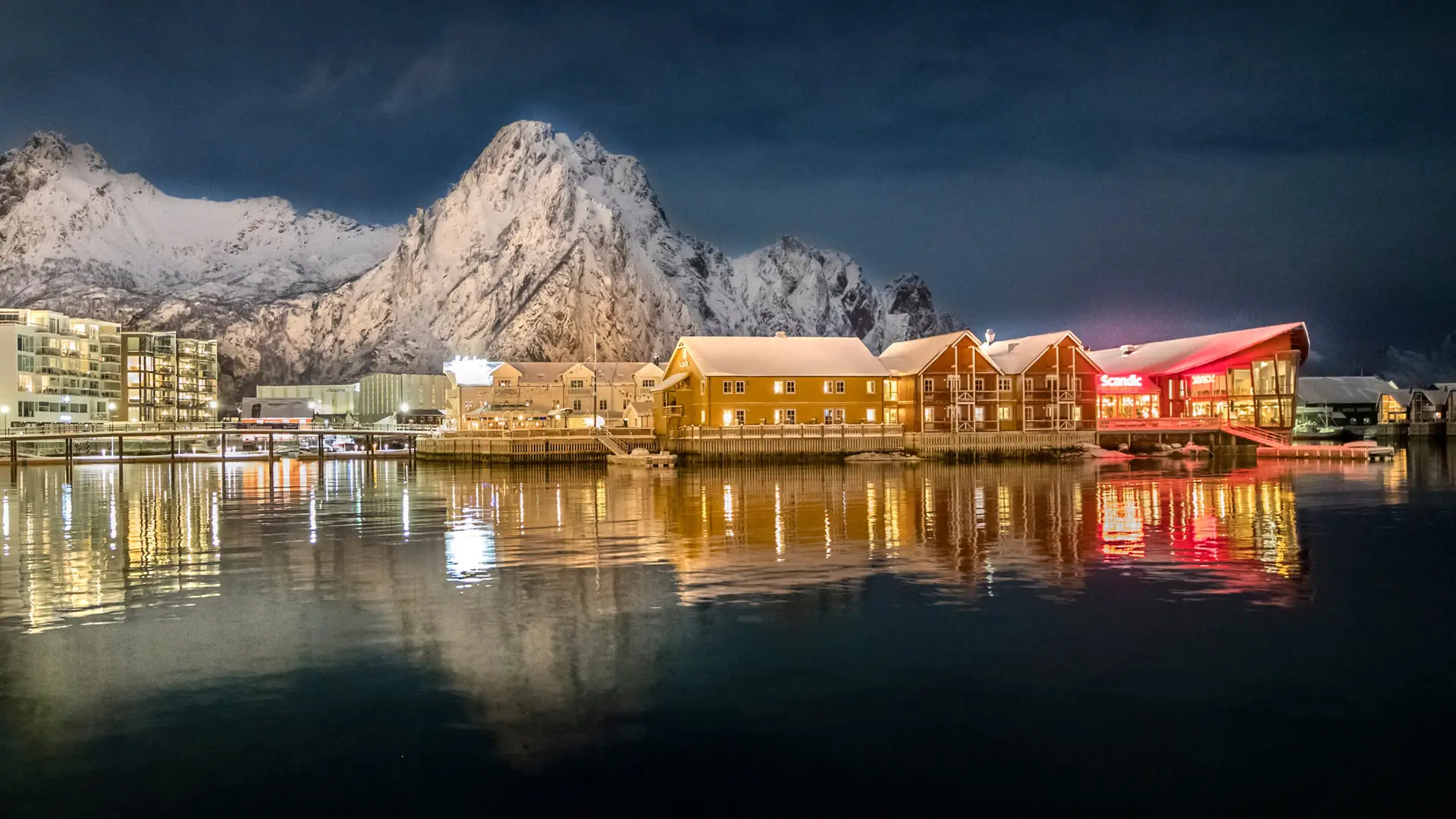
The largest town in Lofoten, positioned between the sea and the mountains. Harbour life, fishing heritage on Svinøya and the dramatic Svolværgeita above it all.
Harbour · Mountains · Svinøya
Soft morning light over the harbour
Warm light across the waterfront
Easy · E10 · Airport · Ferry · Express boat
All year
Town · Harbour · Fishing village · Cultural
Fishing heritage · Local life · Galleries · Boat trips
Svolvær is the largest town in Lofoten, beautifully positioned between the sea and the mountains. With around 5,000 residents, it is a lively coastal community where fishing, tourism, art and everyday local life come together.
The town's name comes from the Old Norse words svalr, meaning "chilly", and vær, meaning fishing village. Svolvær received formal town status in 1918, recognising its importance as a fishing and trading centre, and its harbour remains at the heart of the town today. The surrounding waters have attracted fishermen for centuries, while the town developed into an important hub for fishing, trade and transport. Just offshore, Svinøya preserves an especially strong connection to this past. Once the centre of Svolvær, it is still a living fishing village with historic rorbuer, old quays and fishing buildings.
Today, Svolvær offers a different side of Lofoten alongside its historic character. The harbour is a starting point for boat trips to Trollfjord, fishing excursions and sea-eagle safaris, while the town itself has galleries, museums, restaurants, cafés and year-round activities. The dramatic Svolværgeita and the mountains above the town create a distinctive backdrop that makes Svolvær particularly interesting to explore with a camera.
For photographers, Svolvær is a place to combine harbour life, fishing heritage, mountains and urban Lofoten in the same walk. The best images often come from moving between the busy waterfront and the quieter historic areas around Svinøya, then looking back towards the mountains from the sea.
One short walk takes you from modern Svolvær into one of the oldest parts of the town, with changing views of mountains, sea and fishing village along the way.
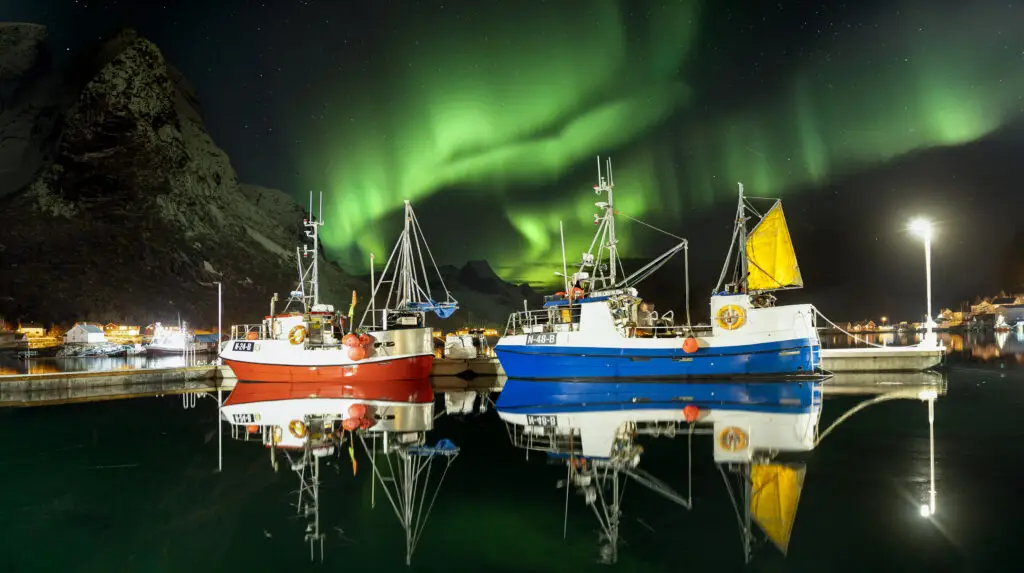 Photo: [photographer]
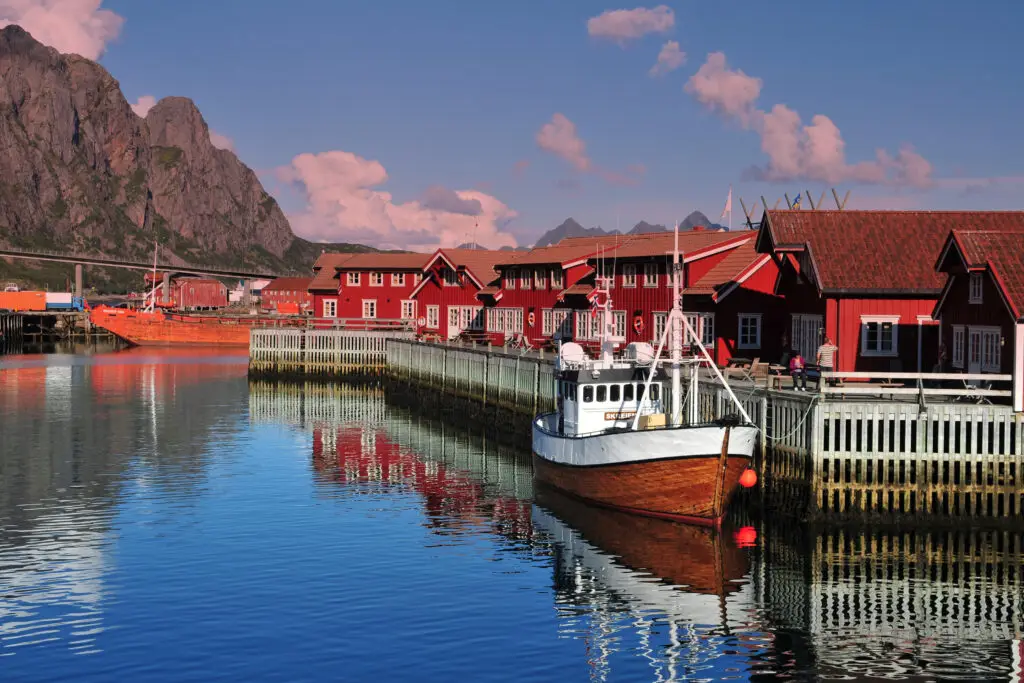
The central harbour is the easiest place to start. Walk along the waterfront and look back towards the mountains for classic Svolvær compositions. The harbour is particularly atmospheric during the winter cod season, while summer brings more boats and activity along the pier.
Open in Google Maps → Photo: Per Lande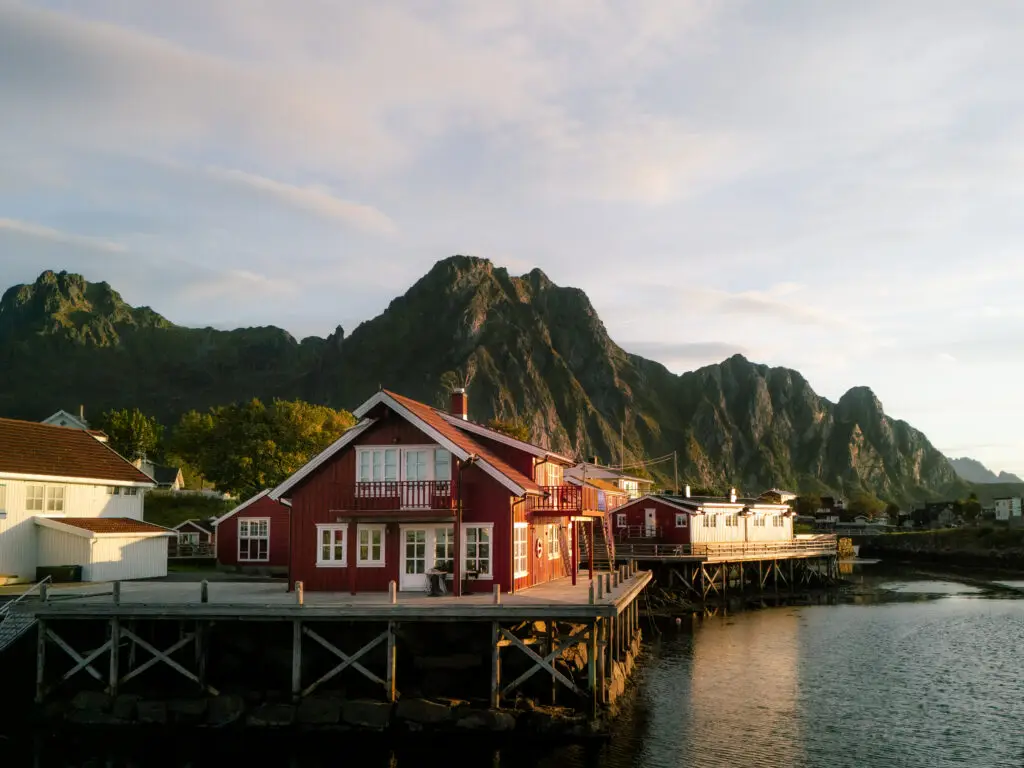
Cross the Svinøya bridge and explore the old fishing village. This is one of the most photogenic areas of Svolvær, with traditional rorbuer, old wooden buildings, fishing equipment, stockfish racks and views towards the surrounding mountains. The walk from the town centre to the molo and the Fisherman's Wife is also a good way to photograph the coastline.
Photo: Mitch Evans
Before crossing onto the island, stop on the bridge and look towards Blåtinden, Fløya and Svolværgeita. Visit Lofoten specifically highlights this as a good viewpoint along the walk to the molo.
Continue towards the end of the breakwater for open views across the sea and back towards Svolvær. The combination of the sculpture, open Vestfjord and mountains creates a strong wide-angle composition.
Avoid the end of the pier in strong winds or high waves.
In summer, use the long daylight hours to photograph the harbour, Svinøya and surrounding mountains. The evening light can remain soft for hours, making late walks around the waterfront particularly rewarding. Autumn's lower light creates more texture on the mountains and wooden buildings; this is a good season for atmospheric harbour photography and, when conditions allow, northern lights. In winter, Svolvær changes completely during the cod season: fishing boats fill the Vestfjord, snow covers the surrounding mountains and the short daylight creates long periods of blue hour. In spring, look for the contrast between snow-covered peaks and the increasingly active harbour; calm days can produce excellent reflections around Svinøya. The darker season provides opportunities for aurora photography around the harbour, Svinøya and elevated viewpoints. For safety, avoid exposed mountain locations in poor weather and choose a lower viewpoint when conditions are unstable.
 Photo: [photographer]
Start at Torget, follow the harbour towards Svinøya, cross the bridge and continue towards the molo. This short route takes you from modern Svolvær into one of the oldest parts of the town, with changing views of the mountains, sea and fishing village along the way.
Svolvær is one of Lofoten's main activity hubs, so it is easy to combine sightseeing with outdoor experiences.
The most iconic excursion is a Trollfjord and sea-eagle safari, departing from the harbour. Several operators run boat and RIB trips into Trollfjord, where you can see sea eagles and experience the dramatic landscape from the water. Explore the Lofoten War Memorial Museum, galleries such as Galleri Gunnar Berg and the North Norwegian Art Centre, or simply walk through Svinøya and its historic fishing environment.
For photographers, the Fishing Village Walk on Svinøya is especially relevant. The guided walk includes Gunnar Berg's gallery, Svolvær's first shop, an old museum cabin and a taste of stockfish, while Visit Lofoten specifically notes the good photo opportunities along the route.
Svolvær offers everything from centrally located hotels to traditional rorbuer. For the most atmospheric stay, Svinøya Rorbuer places you inside the historic fishing village itself, surrounded by old fishermen's cabins, the sea and mountains. The area remains a living fishing village and is particularly interesting for photographers who want to experience Svolvær beyond the modern town centre. In the centre, Thon Hotel Lofoten sits directly by Torget and the harbour, making it convenient for exploring the town on foot. Scandic Svolvær is another waterfront option on Lamholmen.
Børsen Spiseri on Svinøya is particularly connected to the character of Svolvær. It occupies the historic Handelsbrygga from 1828 and specialises in fish and stockfish alongside other dishes using seasonal local ingredients. The quay terrace is a beautiful place to sit during the brighter months. In the centre, the restaurants around the harbour and pier give you plenty of choice, with several focusing on local ingredients. Visit Lofoten describes the waterfront as a lively summer meeting place with restaurants along the pier.
Plan the shoot around the sky. Local weather from yr.no, and a five-night aurora outlook with expected cloud cover.
Browse every location in the guide to plan the rest of your route.
Browse all locations