
 Photo: [photographer]
Where Lofoten becomes almost impossibly dramatic. A 2.5-kilometre fjord with a 100-metre entrance and walls rising more than 1,000 metres from the water. Boat access only.
Varies
Good directional light
Limited inside fjord
Moderate (boat required)
Summer, autumn
Fjord · Cliffs · Remote
Boat access · Changing weather · Limited space
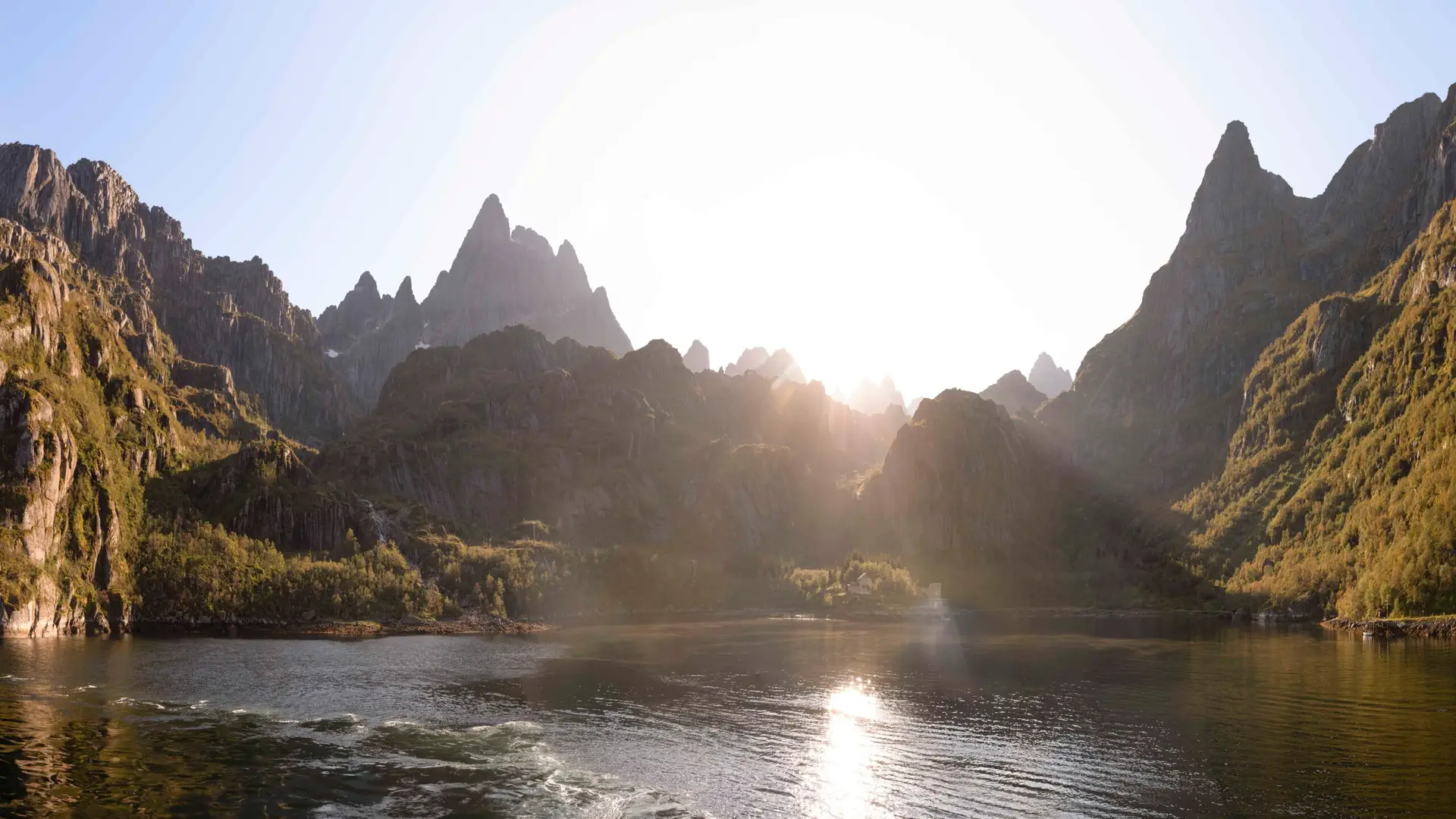
Trollfjord is where Lofoten becomes almost impossibly dramatic. Hidden deep inside Raftsundet on the eastern side of Austvågøya, this 2.5-kilometre-long fjord begins with an entrance only around 100 metres wide, with mountains rising more than 1,000 metres almost directly from the water. Glaciers cling to the highest peaks, waterfalls drop down the rock walls and the fjord gradually opens as you travel further inside.
There is no road into Trollfjord. The fjord can only be reached by boat, which is part of what makes the journey so memorable. From Svolvær, you can enter by RIB, sailboat, cruise boat or electric vessel, with some experiences combining the fjord with sea-eagle safaris. The surrounding waters are an important habitat for white-tailed sea eagles, and it is common to see them during trips through Raftsundet.
For photographers, the challenge is to capture the scale of the place. The narrow entrance makes the mountains feel enormous, while the changing perspective from the boat constantly creates new compositions. Use the boat itself, another vessel, a waterfall or a bird in the frame to give the landscape scale. As you move deeper into the fjord, look behind you too: the entrance framed between the mountains can be just as striking as the view ahead.
Trollfjord is particularly atmospheric when the weather moves in. Low cloud can wrap around the peaks, rain can bring the waterfalls to life and changing light can completely transform the colour and mood of the rock walls. On clear days, the contrast between deep blue water, green slopes and snow or glaciers on the higher peaks creates a very different image.
Do not just photograph the fjord. Photograph the journey into it: the narrow entrance, steep mountains, wildlife, waterfalls and history, unfolding from the water.
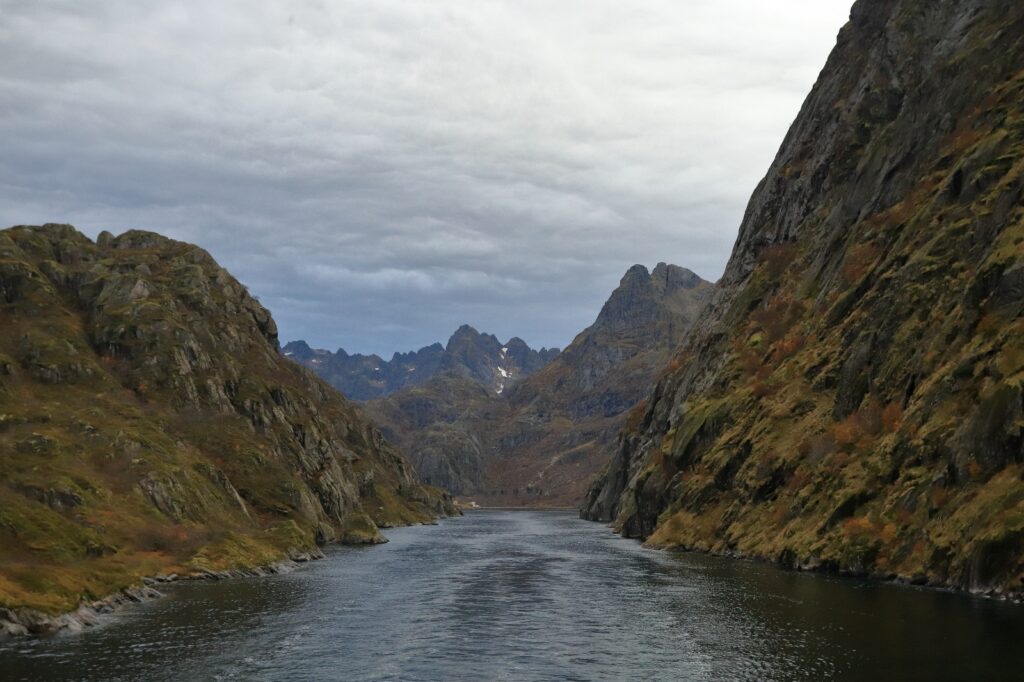 Photo: Juan Pascual
Moving deeper into the fjord creates progressively more enclosed and dramatic compositions.
Best in calm conditions with directional light. Selective illumination on cliff sections creates the strongest images.
Use telephoto lenses to compress the cliffs and enhance scale. Look for light hitting only parts of the cliff face; selective illumination creates depth and drama.
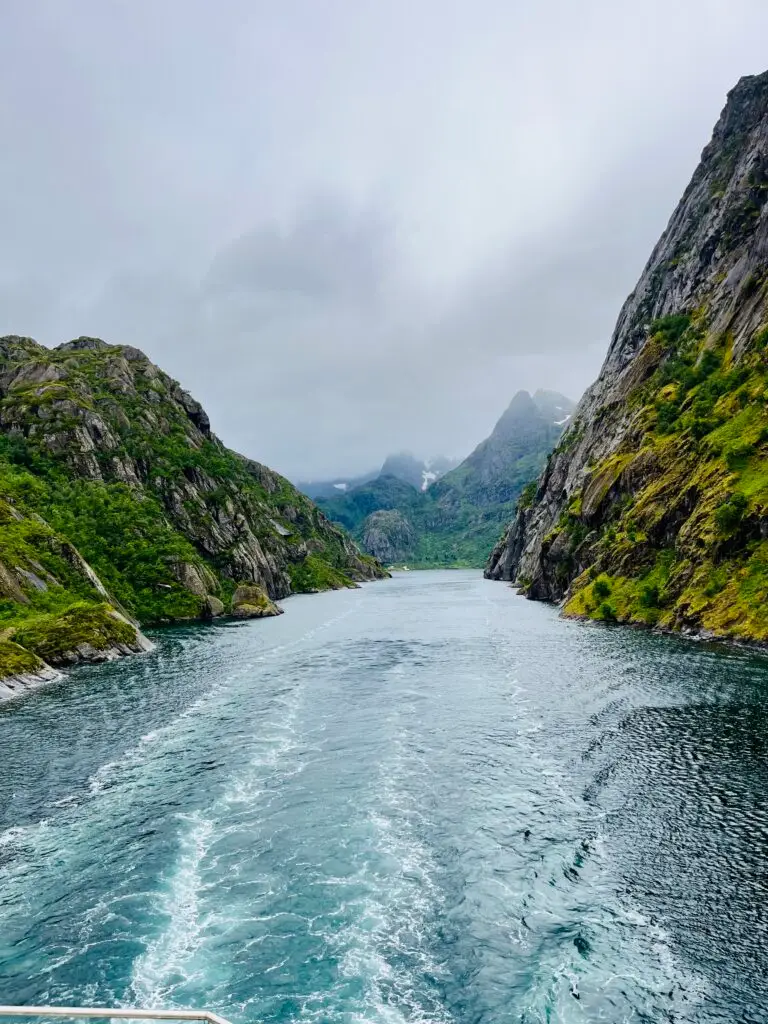 Photo: Elisabeth Blömer
The contrast between illuminated rock and deep shadow is what gives Trollfjord its drama.
Trollfjord is more than a spectacular landscape. It also has an important place in Northern Norway's fishing history. In 1890, the narrow fjord became the setting for the Battle of Trollfjord, a conflict between small-boat fishermen and the operators of larger fishing vessels over access to the fjord and fishing rights. The event became part of the wider history of the Lofoten fishery and was later immortalised in Gunnar Berg's famous painting Trollfjordslaget, now displayed at Galleri Gunnar Berg on Svinøya in Svolvær.
The landscape has attracted visitors for much longer than modern tourism. German Emperor Wilhelm II visited Lofoten several times from 1889, with Trollfjord and nearby Digermulen among the places that inspired him. The fjord has since become one of the most photographed landscapes in the region and has even appeared on screen, including in the 2016 film Downsizing.
Plan the shoot around the sky. Local weather from yr.no, and a five-night aurora outlook with expected cloud cover.
Browse every location in the guide to plan the rest of your route.
Browse all locations